Safe sleep for your newborn: Reducing the risk of SIDS
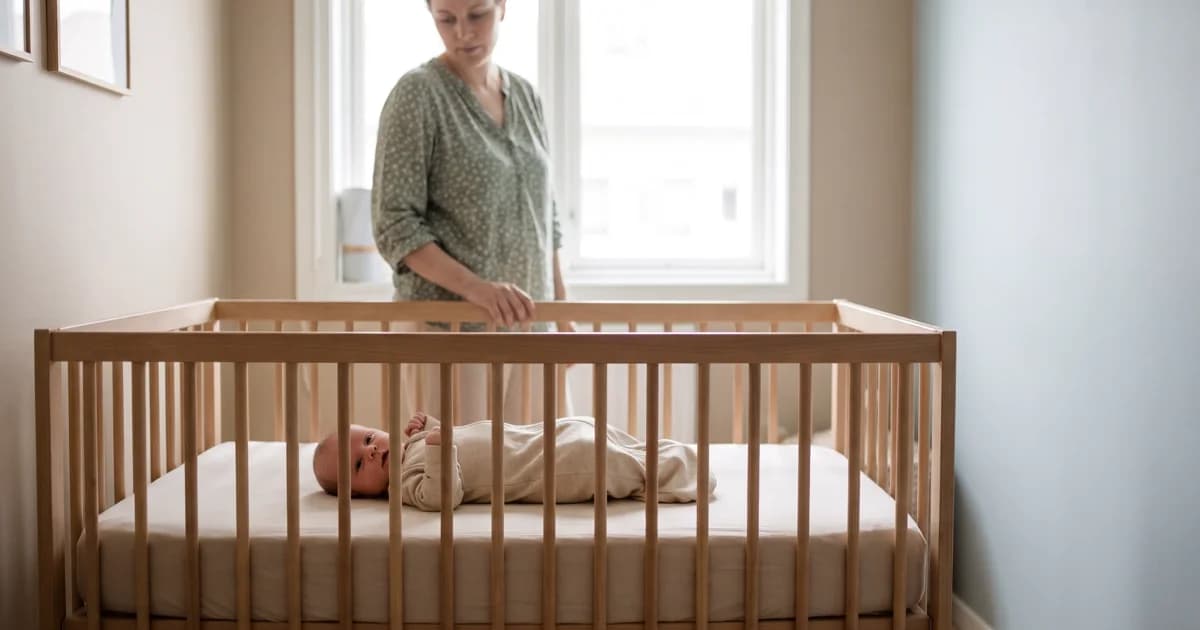
Safe sleep practices are designed to protect your baby from Sudden Infant Death Syndrome (SIDS / vöggudauði) and accidental suffocation. These recommendations are not based on outdated customs or excessive caution; they are evidence-based measures shown to lower the risk.
Every recommendation below applies to every sleep, day and night, whether your baby is settling down for an eight-hour night or taking a twenty-minute nap.
1. The Core ABCs of Safe Sleep
- A — Alone: Your baby should sleep in their own clear, flat, separate sleep space.
- Keep the cot completely empty: no pillows, no loose blankets, no duvets, no cot bumpers (padded or breathable), no positioners/sleep pods, and no soft toys.
- A firm, flat, waterproof mattress with a tightly fitted sheet is all that belongs in the crib.
- B — on their Back: Always place your baby down on their back to sleep. Back-sleeping keeps the infant airway open and protects their natural swallowing reflexes. Once babies learn to roll confidently both ways (from back to front and front to back on their own, usually around 5–6 months), they can find their own sleeping position, but always start them on their back.
- C — in a Cot in your room: For at least the first six months, your baby should sleep in a separate cot, crib, or bedside bassinet placed directly beside your bed in the same room. Sharing a room without sharing a bed lowers the risk of SIDS.
2. Temperature, clothing, and the room environment
Overheating is a significant risk factor for SIDS:
- Ideal room temperature: Keep the bedroom at a comfortable, cool temperature—ideally between 16°C and 20°C (61°F–68°F).
- Clothing: Dress your baby in layers appropriate for the room. A well-fitted, sleeveless baby sleep bag (gro-bag) with no hood is the safest choice because it cannot be kicked over the face.
- If using blankets: Use lightweight, cellular blankets tucked firmly under the mattress at chest level, with the baby's feet placed right at the bottom of the cot ("feet-to-foot" position) so they cannot wriggle down underneath the covers.
- Never use hats indoors: Babies regulate their body temperature primarily through their heads. Remove hats and outdoor hoods as soon as you come indoors or enter a warm car.
3. Major risk factors: Smoke, alcohol, and medications
- Smoke-free environment: Second-hand and third-hand smoke severely impairs an infant’s respiratory control and arousal mechanisms. Never allow anyone to smoke or vape inside your home or car, and never share a room or bed with a baby if anyone in the household smokes.
- Alcohol, medications, and exhaustion: Never share a bed or fall asleep with your baby if you or your partner have consumed alcohol, taken medication that causes drowsiness, used recreational substances, or are experiencing extreme, incapacitating exhaustion.
🚨 Sofas and Armchairs: The Most Dangerous Sleep Surfaces
Never, under any circumstances, fall asleep with a baby on a sofa, couch, or armchair.
Falling asleep on a sofa with an infant greatly increases the risk of SIDS and accidental suffocation. A baby can easily slip between the cushions, become trapped against your body, or roll into a position where their chin drops to their chest, silently cutting off their breathing.
- Planning ahead for night feeds: If you feel exhausted during a 3:00 AM feed, it is safer to feed sitting upright in your bed (cleared of loose pillows and duvets) than to sit on a sofa. If you suspect you might doze off, set an alarm on your phone and always return your baby to their own safe cot as soon as you wake.
4. Car seats, swings, and baby carriers
Car safety seats, bouncers, swings, and strollers are designed for transport and activity, not for routine sleep:
- In infants under four months, sleeping at an incline causes the heavy head to fall forward onto the chest (positional asphyxiation), which can silently obstruct the airway.
- If your baby falls asleep in their car seat during a journey, monitor their breathing closely and transfer them to a firm, flat cot as soon as you arrive at your destination.
5. The Icelandic Tradition: Sleeping outdoors in prams (Útisvefn)
Letting babies sleep outdoors in prams during daytime naps is a cherished tradition in Iceland and the Nordic countries:
- Take care in the cold: Many families skip outdoor naps in hard frost (around -10°C is a common limit), strong wind, sleet, or thick fog. Ask your nurse at ung- og smábarnavernd what suits your baby.
- Dress in breathable wool layers: Use pure wool base layers and an insulated pram footmuff, checking the back of their neck periodically to ensure they are warm without sweating.
- ⚠️ NEVER cover the pram opening with thick blankets or plastic: Covering a pram with a thick blanket, towel, or airtight rain shield traps heat and exhaled air, causing dangerous temperature spikes and oxygen deprivation. Use only breathable insect nets or specially designed ventilated sun/wind shields that allow free airflow.
- Always use an active baby monitor and keep the pram within direct sight.
📞 Safe Sleep Resources in Iceland
- Well-Child Health Care (Ung- og smábarnavernd): Discuss sleep routines and cot setups with your health clinic nurse.
- Health Advisory Line: Call Heilsuvera at 1700 (24/7) if you have concerns about infant breathing or sleeping habits.
- National Emergency: Call 112 immediately if your baby becomes unresponsive, floppy, or struggles to breathe.
This guide is general information, not advice about your situation. Rules, costs and deadlines change — check the official source before you act on it.
Vagga is an informational planning assistant. It does not replace official government, healthcare, legal, financial, or medical advice. Always confirm deadlines and requirements with the relevant Icelandic authority or professional. Learn more →